Bathroom Remodeling
Do You Need a Permit for a Bathroom Remodel in Denver?
By Alex Kissel · June 22, 2026 · 6 min read
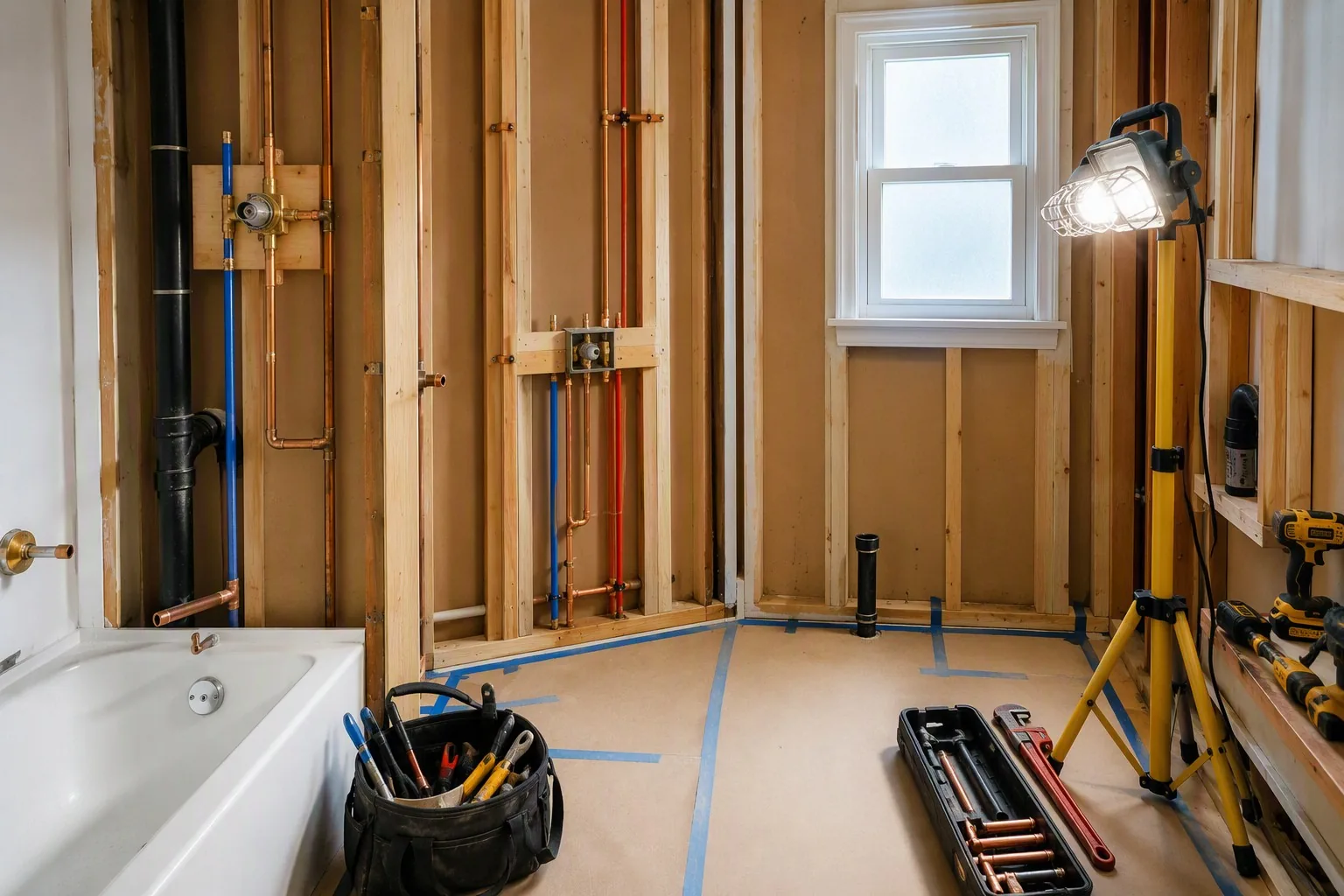
Short answer: sometimes yes, sometimes no — and the line is based on what you’re changing, not how much you’re spending. If your project touches plumbing lines, electrical circuits, or structure, a bathroom remodel permit in Denver is almost certainly required. If you’re swapping finishes and fixtures in place, it usually isn’t.
We’re a licensed and insured General Contractor based in Aurora, and permits are part of our everyday work across Denver, Aurora, Lakewood, and the rest of the metro. Here’s how to figure out where your project falls.
Work That Usually Does NOT Need a Permit
In most Denver-metro jurisdictions, you can typically do the following without pulling a permit:
- Painting, wallpaper, and cosmetic finishes
- Replacing flooring (tile, LVP) without structural changes
- Swapping a vanity, toilet, faucet, or light fixture in the same location
- Replacing a tub or shower surround on existing plumbing in the same footprint
- New countertops, mirrors, and accessories
Our Surrounds Only Facelift (from $6,500, one day) is a good example — new wall panels over properly prepped existing surfaces, fixtures in place. That’s cosmetic work and generally permit-free.
Work That Usually DOES Need a Permit
The rule of thumb across the metro: if you’re modifying the systems behind the walls, the city wants to inspect it.
- Plumbing changes — moving a drain, converting a tub drain to a shower drain with relocation, adding a second sink, rerouting supply lines
- Electrical changes — new circuits, moving outlets, adding a dedicated circuit for a bidet seat or heated floor, moving lighting over a shower (which has its own code requirements)
- Structural changes — removing or altering walls, even non-load-bearing in some jurisdictions
- Ventilation — adding or relocating an exhaust fan duct to the exterior
- Windows — changing the size of an opening
Note the nuance on tub-to-shower work: replacing a tub with a shower using the existing drain location is often permit-free, but many conversions benefit from upsizing the 1½” tub drain to a code-preferred 2” shower drain, and once you’re altering drain lines, most departments want a plumbing permit and inspection.
How It Works in Denver Specifically
In the City and County of Denver, residential permits run through Denver Community Planning & Development, and many trade permits can be applied for online through the city’s e-permits system. Plumbing and electrical permits are typically pulled by the licensed trade contractors doing the work. After rough-in work is complete — pipes and wires in place but before walls close — an inspector visits to verify it, then a final inspection happens when the job is done.
Timeline-wise, trade permits for a bathroom are usually quick; they’re not the months-long process people associate with additions or new construction. The inspection scheduling adds a day or two of coordination at most on a typical bathroom.
Other Metro Cities Have Their Own Rules
If you’re outside Denver proper, your project goes through your own city’s building department, and the details differ:
- Aurora runs its own building division with online permitting; requirements are broadly similar to Denver’s.
- Lakewood, Arvada, Littleton, Centennial, Parker, Highlands Ranch (Douglas County) — each has its own department, fee schedule, and inspection process. Unincorporated areas go through the county.
- HOAs are a separate layer. In Highlands Ranch and much of Centennial and Parker, an HOA architectural review may apply to exterior changes — less common for bathrooms, but worth checking if a window or vent changes.
This patchwork is one reason to hire a contractor who works across the metro regularly. Fees, submittal requirements, and inspection lead times differ enough that “how it worked on my last house in Arvada” isn’t a reliable guide for your place in Aurora.
What Permits and Inspections Actually Cost
For a typical bathroom remodel, combined plumbing and electrical permit fees usually land in the low hundreds of dollars, scaled to the project value. It’s a small line item. Our Denver bathroom remodel cost guide covers the full budget picture — permits are rarely more than a rounding error in it.
The inspection itself is free with the permit and, honestly, it’s a benefit: a second set of qualified eyes on the plumbing and electrical work before the walls close. We build inspection scheduling into our timelines — a complete bathroom remodel runs 5–12 days partly because rough-in inspections sit in the middle of the sequence.
The Real Risks of Skipping the Permit
Homeowners sometimes ask whether they can just skip it. Here’s what that gamble actually involves:
- Stop-work orders and fines if a neighbor reports the work or an inspector notices it
- Opening finished walls so an inspector can verify plumbing and electrical after the fact — at your cost
- Insurance problems if a leak or fire traces back to unpermitted work; claims can be contested
- Resale friction. Unpermitted work surfaces in buyer inspections and appraisals; in the Denver metro’s competitive market, it’s a common reason deals get renegotiated or die
- No independent verification that the work behind your new tile is safe and to code — the thing the permit was paying for
None of this is scaremongering; it’s the standard list of problems we get called in to fix on DIY and handyman jobs.
Why the Contractor Should Pull the Permit
One red flag worth knowing: if a contractor asks you to pull the permit yourself “as the homeowner,” walk away. The permit holder is legally responsible for the work. When we pull it, our license and insurance stand behind the job, we schedule the inspections, and the record of permitted work belongs to your house — which is worth something when you sell.
We’re also an EPA Lead-Safe Certified Firm (NAT-F212803-1), which matters on permits too: demolition in pre-1978 homes — a huge share of Denver bungalows and Aurora ranches — has federal containment requirements that inspectors and buyers increasingly ask about.
Have a Project in Mind? Ask Us First
The fastest way to find out whether your project needs a permit is a free in-home estimate. We’ll look at the scope, tell you plainly what your city will require, and include permit handling in your fixed, itemized price. Family-owned, 200+ projects completed, 4.9 stars on Google across 40 reviews, and a 1-year labor warranty on everything we build.
Call 720.705.1461 or book your free estimate. Curious how permits fit into the overall schedule? Our bathroom remodel timeline guide walks through it week by week, and the pricing page shows current starting prices for every project type.
Frequently Asked Questions
Do I need a permit to remodel my bathroom in Denver?
It depends on the scope. Cosmetic work like paint, flooring, and like-for-like fixture replacement in the same locations generally does not need a permit. Moving or adding plumbing lines, new electrical circuits, structural changes, or window changes generally do. When in doubt, Denver Community Planning & Development can confirm requirements for your address.
How much does a bathroom remodel permit cost in Denver?
Permit fees vary by city and by the value of the work, but for a typical residential bathroom project in the Denver metro, expect a few hundred dollars for plumbing and electrical permits combined. The fee is minor compared to the cost of tearing out unpermitted work or losing a sale when an inspector or buyer flags it later.
Who pulls the permit, the homeowner or the contractor?
Either can, but when a licensed General Contractor pulls the permit, their license and insurance stand behind the work and they are responsible for passing inspections. If a contractor asks you to pull the permit yourself as the homeowner, treat it as a warning sign — it shifts legal responsibility for the work onto you.
What happens if I remodel my bathroom without a permit?
Risks include fines or a stop-work order if discovered mid-project, having to open finished walls so an inspector can see the work, complications with insurance claims if unpermitted work causes damage, and problems at resale when buyers or appraisers flag unpermitted renovations. Correcting it after the fact usually costs more than the permit would have.
Ready to start your project?
Schedule your free in-home estimate today. Fixed, itemized pricing — no surprises, no pressure.
Related articles
August 3, 2026
Does a Bathroom Remodel Pay Off in Denver's Housing Market?
Bathroom remodel ROI Denver guide: which projects buyers actually pay for, realistic return expectations, and when remodeling beats moving in the metro.
Read article
July 27, 2026
Accessible & ADA Bathroom Remodeling in Denver and Aurora
ADA bathroom remodeling Denver and Aurora guide: curbless showers, grab bars, and aging-in-place design from a licensed local contractor with fixed pricing.
Read article
July 20, 2026
Budget Shower Renovation in Denver: What $10K Gets You
Budget shower renovation Denver guide: what under $10,000 actually buys, what's included at $6,500 and $9,000, and how to avoid cheap-remodel mistakes.
Read article