Kitchen Remodeling
Countertop Replacement Cost in Denver: Quartz & Granite
By Alex Kissel · September 14, 2026 · 6 min read
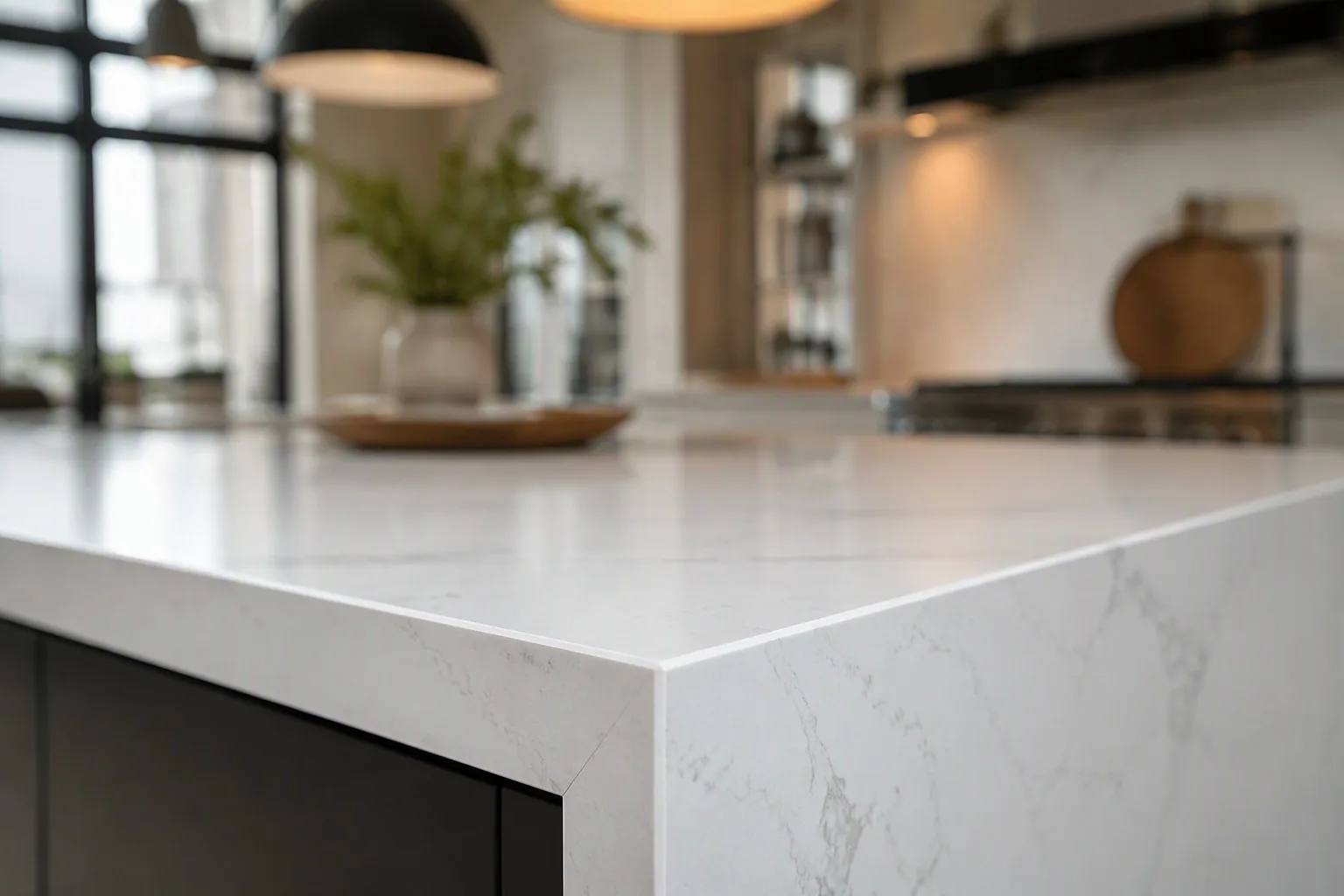
Countertop replacement is the highest-impact, lowest-disruption upgrade you can make to a Denver kitchen. Done professionally, it starts at $4,200, takes one to two days on site, and makes the entire room read as renovated — even if nothing else changes.
But “what do countertops cost?” doesn’t have a single number answer, because the material you choose and the shape of your kitchen move the price considerably. Here’s the breakdown we give homeowners when they call us — my wife Daria and I run a family-owned remodeling company based in Aurora, and counters are part of nearly every one of the 200-plus kitchen and bath projects we’ve completed across the metro.
What Countertop Replacement Costs in Denver
Our countertop replacement service starts at $4,200 and includes the full scope: removal and disposal of your old tops, laser-accurate templating, fabrication, installation, seaming, and reconnection of the sink and fixtures. What moves a project above that starting point:
- Material. This is the biggest lever — see the comparison below.
- Square footage. A compact galley in an Aurora ranch might run 30 square feet of counter; a big open kitchen with an island in Highlands Ranch can double that.
- Edge profile. A standard eased or pencil edge costs less than an ogee or mitered waterfall edge.
- Cutouts. Every sink, cooktop, and faucet hole adds fabrication labor. An undermount sink costs more to cut and polish than a drop-in.
- Backsplash. A four-inch splash in the same material is economical; a full-height slab or tile backsplash is a bigger add.
The right way to budget is with an actual measurement. We do free in-home estimates with fixed, itemized pricing — you’ll know the number to the dollar before committing, and you can compare it against the tiers on our pricing page.
Choosing a Material: The Real Trade-Offs
Here’s how the common options stack up for Denver-area kitchens:
| Material | Cost tier | Maintenance | Best for |
|---|---|---|---|
| Quartz | $$–$$$ | None — never seals | Busy families; hard-water areas |
| Granite | $$–$$$ | Seal periodically | Natural stone lovers; unique slabs |
| Quartzite | $$$ | Seal periodically | Marble looks with more durability |
| Butcher block | $–$$ | Oil regularly; watch moisture | Warm accents, islands |
| Laminate | $ | None, but not repairable | Tight budgets, rentals |
A few notes from the field:
Quartz is what most of our metro clients land on. It’s engineered, non-porous, and indifferent to the hard water we have across Aurora, Centennial, and Parker — no etching, no sealing schedule, no panic when someone sets down a cut lemon.
Granite remains a strong second. Every slab is genuinely one of a kind, it handles hot pans better than quartz, and entry-level granite often costs less than premium quartz. The trade is periodic sealing and a bit more mindfulness with oils and wine.
Marble is the one we actively caution against in working kitchens. It etches and stains no matter how carefully you live, and Colorado’s hard water makes it worse. If you love the look, quartzite or a marble-look quartz gets you there without the anxiety.
For a deeper side-by-side, read our quartz vs. granite comparison for Colorado homes.
What Drives the Price Up (and How to Control It)
After material, these are the line items that most often surprise homeowners:
- Layout complexity. Long unbroken runs are cheap to fabricate. Lots of corners, angles, and short segments mean more seams and more labor.
- The island. Big islands sometimes require a second slab or a seam, and oversized islands can push you into jumbo slab pricing.
- Sink decisions. A new undermount sink plus cutout and faucet holes adds cost — but replacing a tired sink during a counter swap is the cheapest time to do it, since the plumbing is already disconnected.
- Removal surprises. Old tile counters set in mortar, or tops glued to cabinets that aren’t level, add demo time. In Denver’s 1950s–70s ranches we occasionally find cabinets that need shimming before new stone can go down.
- Edge upgrades. Decorative edges are priced per linear foot and add up faster than people expect on a big kitchen.
The fix for all of this is boring but effective: an itemized quote. Every line is visible, so you decide what’s worth it — there’s no lump-sum mystery.
The Replacement Process, Start to Finish
Homeowners are usually surprised how fast this goes. Here’s the actual sequence:
- Estimate and measure. We look at the cabinets, check level and structure, and price the job fixed and itemized.
- Slab selection. You pick the actual material — for natural stone, the specific slab your counters will be cut from.
- Templating. A precise digital template of your cabinet runs, usually under an hour.
- Fabrication. Typically one to two weeks at the shop, depending on material and edge work.
- Install day. Old tops out, new tops set and seamed, sink and faucet reconnected. Most kitchens are done in a day; large or complex ones take two. You have a working sink again the same day.
If you’re pairing counters with cabinet work, the sequence matters: cabinets or refacing first, then template, then counters. We schedule all of it as one project so you’re not coordinating trades.
Colorado-Specific Things Worth Knowing
A few local factors we plan around on every counter job:
- Dry climate and wood. If you’re considering butcher block, know that Colorado’s dry air will shrink and crack wood counters that aren’t acclimated and maintained with oil. They’re beautiful on islands; we steer people away from them next to sinks.
- Hard water. Denver metro water leaves mineral spots on everything. Dark polished stone shows it most; honed finishes and quartz hide it best. It’s also worth resealing around faucets and sinks properly at install — a gap there wicks water under the stone over time.
- Altitude and curing. Sealers, adhesives, and caulks cure differently at 5,280 feet and 15% humidity — usually faster, which is convenient, but it means timing seams and cleanup differently than coastal installers do. It’s one reason local fabrication and install experience matters.
When to Pair Counters With Other Work
New counters on tired cabinets is a half-finished look, so think about the whole picture before you commit:
- Cabinets solid, doors dated? New counters plus cabinet refacing reads as a full remodel, done in 3 to 5 days.
- Just want the fastest refresh? Counters alone, in and out in 1 to 2 days.
- Layout actually broken? That’s full remodel territory — counters go in near the end of a 7–14 day build.
If a full remodel is on your horizon within a year or two, wait on the counters — you don’t want to template and cut stone for cabinets you’re about to remove. If the layout works and you just hate the surfaces, counters now are money well spent.
Get Your Exact Number
Every kitchen prices differently, but the process is simple: a free in-home estimate, fixed itemized pricing, and a 1–2 day install, all backed by our 1-year labor warranty. Financing is available with a soft credit check, including 0% APR for 18 months for qualified buyers.
Call 720.705.1461 or request your free estimate, and we’ll measure your kitchen and hand you a real number — not a range.
Frequently Asked Questions
How much does countertop replacement cost in Denver?
Professional countertop replacement in the Denver metro starts at $4,200 with our team, which includes removal of the old tops, precise templating, fabrication, installation, and reconnection of your sink and fixtures. The final price depends on material, square footage, edge profile, and the number of cutouts. We quote fixed, itemized pricing after a free in-home estimate.
How long does countertop replacement take?
On-site work takes 1 to 2 days — removal of the old counters and installation of the new ones. Before that, the fabricator templates your cabinets after any new cabinetry is set, and fabrication typically takes one to two weeks depending on the material. From estimate to finished counters, most projects complete within two to three weeks.
Is quartz or granite better for Colorado homes?
Both perform well here. Quartz is non-porous, never needs sealing, and shrugs off hard-water spots — which matters in the Denver metro. Granite is natural stone with one-of-a-kind patterning and excellent heat tolerance, but it needs periodic sealing. Our dry climate affects neither. We help you compare slabs in person during your estimate.
Can I replace countertops without replacing my cabinets?
Yes, and it's one of the most cost-effective upgrades we do — as long as the existing cabinets are structurally sound and level. We check both during your free estimate. If the cabinet boxes are good but the doors are dated, pairing new counters with cabinet refacing (starting at $10,500) delivers a full-kitchen look for far less than a remodel.
Ready to start your project?
Schedule your free in-home estimate today. Fixed, itemized pricing — no surprises, no pressure.
Related articles
September 16, 2026
Kitchen Remodeling in Aurora, CO: A Local Homeowner's Guide
Kitchen remodeling in Aurora, CO from a local family contractor: costs, permits, layouts for Aurora's ranch homes, and how to hire the right crew for your home.
Read article
September 12, 2026
Kitchen Remodel ROI in Denver Metro: What Adds Resale Value
Kitchen remodel ROI in Denver explained: which upgrades return the most at resale, what buyers in Aurora & the metro pay for, and where not to overspend.
Read article
September 10, 2026
Best Kitchen Layouts for Denver Ranch & Mid-Century Homes
Kitchen layout ideas Denver ranch & mid-century homeowners can use: galley, L-shape & island conversions, with practical tips for 1950s-70s floor plans.
Read article